Sunday, January 23, 2011

Old Fashioned

I've been making these lately. This is my first after buying an ice cube tray for giant-sized ice cubes.

Although people say that the giant ice cubes chill more without melting, my guess is that this can't be true, and that chilling is directly proportional to melting. Luckiliy my daughter has a science fair coming up, so perhaps we can test it.

Posted by Picasa

Saturday, January 15, 2011

Ayada

After the last post, I decided to try out Ayada. I read a post raving about the panang duck curry.  When I arrived, I was surprised to find that the duck curry was $15, while a normal curry is $8.  That's a pretty big difference.  Was it going to be worth it?

I decided to try it out, and when it came out, the price difference became a little more understandable. It was basically all about the meat, with the panang sauce more of an generous sauce than the normal meat-in-curry combo you see elsewhere.

The duck was indeed pretty well cooked, and had delightfully crisp parts. The panang sauce was very good, about as good as Sripraphai.

This is too expensive to make a habit out of, but it was nice to try. It would be better as part of a larger spread of dishes, due to the meat-centric nature of the dish.


Downhill

Amusing: Many on Chowhound say that Sripraphai is going downhill.  Those that do, say to go to Ayada instead.  Of course, the reports are already in that Ayada is going downhill.

The key thing to realize here is that Chowhounders are a bit crazy.  They often mistake inconsistency with long-term trends. It's still a good source of information, but take what they say with a grain of salt.

The salt, of course, has also gone downhill.  It used to be saltier.

Sunday, January 9, 2011

Seasoning cast iron

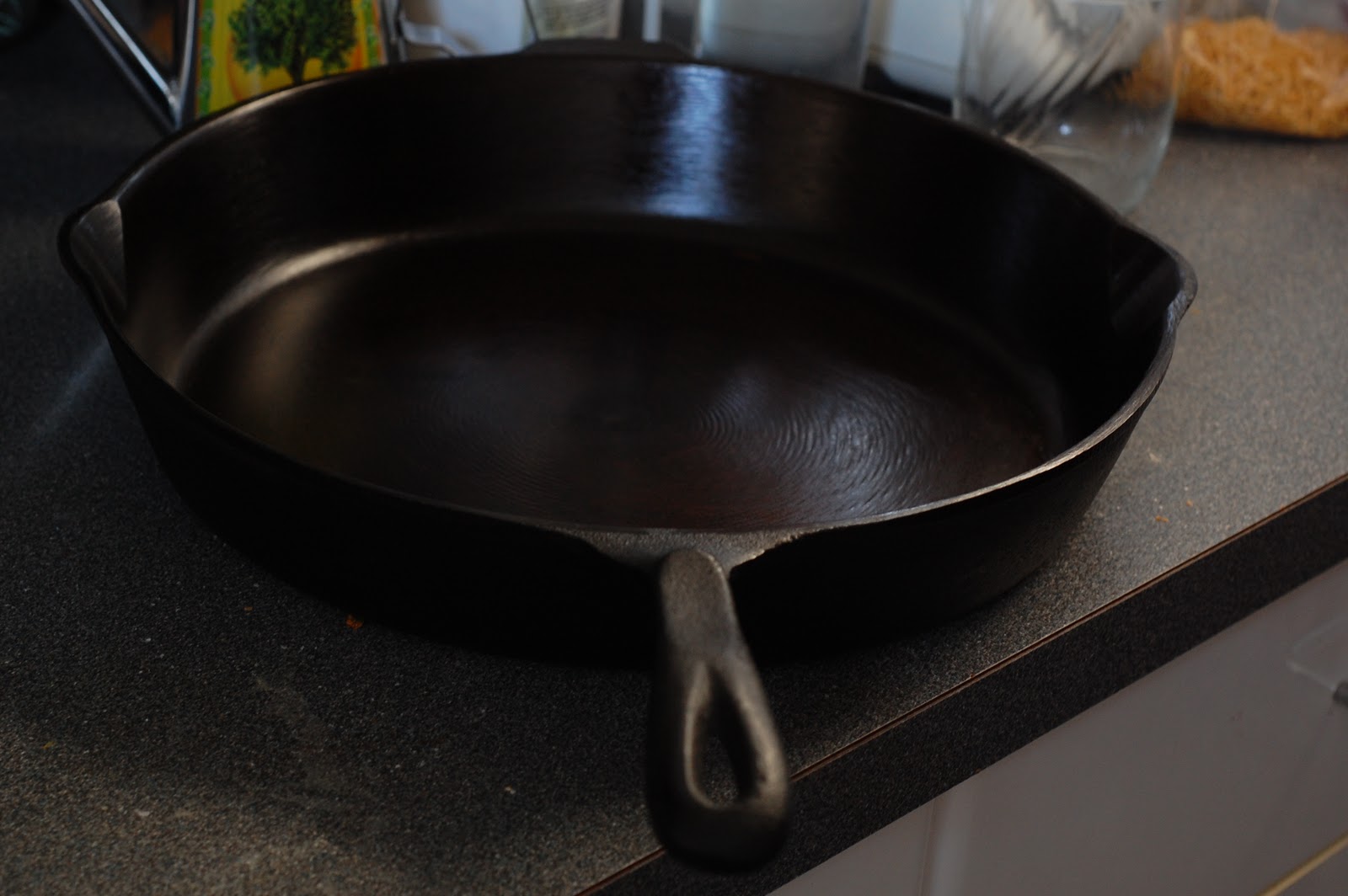
Cast iron cookware is cheap and durable.  I recently came across a great article by Sheryl Canter about seasoning cast iron, which takes a pretty thorough science-based approach and comes up with a unique way to season cast iron.  I decided to use it on my most poorly seasoned pan, a large 13+ inch pan that I mostly use for making pasta dishes.

I neglected to take a "before" picture, but here is an "after" one:
The seasoning is dark, smooth, and appears durable.  This technique looks pretty solid; I'd recommend it.  I intend to use this pan for a while and see how it holds up.

Saturday, January 1, 2011

Trip to a cocoa estate

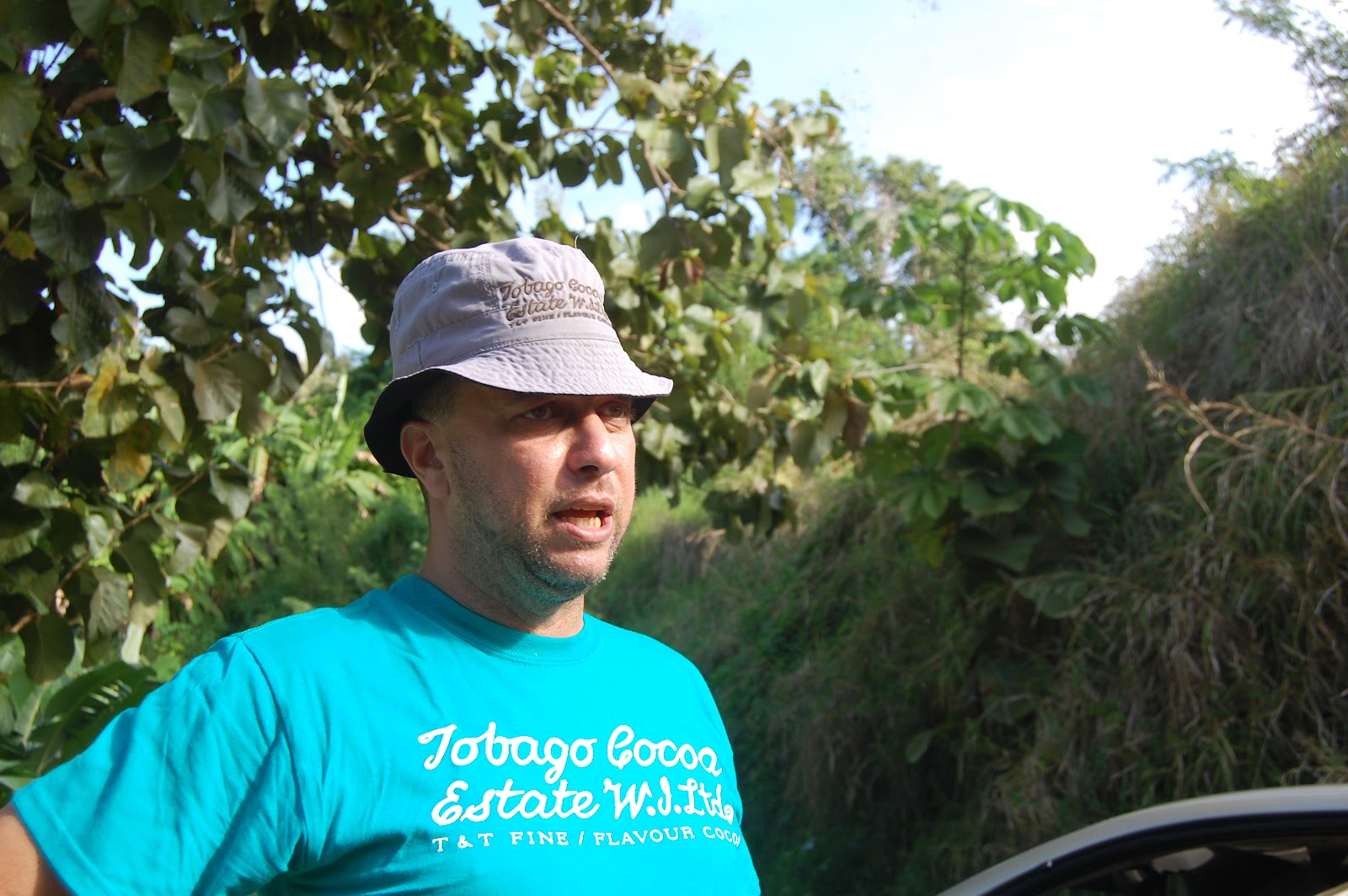
While in Tobago recently, we went to visit a cocoa estate, specifically Tobago Cocoa Estate.  They offers tours, which I highly recommend.
We were met by the owner Duane Dove, who explained to us about his estate.
The first thing I learned is that this is not a cocoa plantation but a cocoa estate.  The difference is that a plantation is just all the same kind of crop.  An estate grows many different things.  This cocoa estate was only about 7 years old, is completely organic, and everything is done by hand, including clearing land and harvesting.  The beans are not sold to buyers, but are shipped to France to make single-estate chocolate, which is sold in France, London, Tokyo and various Scandinavian countries.

There are three main varieties of cocoa: Criollo, thought to be the finest type of beans, grown mainly in Madagascar and Venezuela, the Forestero, which is the bulk of all cocoa grown, less fine, more bitter, but strong, and Trinitario, which is somewhere between the two in quality.  All the cocoa in this estate was Trinitario.
Each tree only had a handful of pods, and each ripened according to the specific variety of plant it was.  Some were red when ripened, others were yellow.
The pods were often protected with green nets to camouflage the pods from the most troublesome pest: the parrots. Yes, those cute parrots we all love, love to snack on the ripened cocoa pods.  Besides the camouflage, the estate also brings in a falconer to try and attract hawks and other predators of the parrots to the area.
Each cocoa tree will start bearing fruit a few years after planting, and will continue bearing at maximum rate for about twenty-five years.  For each tree there is a banana tree planted to shade it for the first few years of the cocoa tree's life.  The estate has only had two harvests so far, but seems to be ramping up production quickly.

Later in the tour, they chopped open a cocoa pod, which opened to reveal a column of beans covered in a white flesh.  You can just take one of the flesh-covered pods and suck on it.  To me, the flesh tasted like citrus and banana.  If you opened up the bean itself, it looks purple at this stage.

The beans are fermented for several days, and then dried.  We went to where the coffee beans were drying in the sun.  This has to be carefully guarded.  If any rain got in, the whole batch would have to be thrown out.
A few other miscellaneous facts I learned:

  • Cheap chocolates are mostly vanilla and sugar flavor.  There is very little cocoa mass.  Most of the loss of mass comes from the fact that they separate out all the cocoa butter and replace it with palm oil.  The cocoa butter is then sold to the cosmetics industry.
  • I asked about Trinidadian cocoa tea.  The cocoa balls you get in Trinidad are very hard, and must be grated to get cocoa powder which you mix with boiling water, sugar, and a bit of milk to make a cocoa tea.  Compared to hot chocolate, it is pretty weak stuff, but the flavor is nice.  But why is it so weak?  I asked about this, and was told that the other chocolate has more sugar, milk and extra ingredients added to it to make it rich and creamy.  The Trinidadian cocoa balls you get are pretty much just cocoa mass and spices.  Also, the beans that make up these cocoa balls are C-grade cocoa beans, which due to their non-standard size or other attributes can't be used in normal exported cocoa.
  • In the estate, they have a number of interesting plants.  There are several coffee trees, which produce coffee for the consumption of the workers.  There are a variety of local fruit trees, like sugar care, gru-gru, Trinidad cherries.  They also had some Immortelle trees, which helps absorb excess water in the rainy season, and releases it in the dry season.
  • Most small cocoa farmers in Trinidad (and probably elsewhere as well) sell to a cocoa purchases, where the beans are mixed.  The farmer is paid by weight, so they have an incentive to over-water the beans to bulk them up.  This results in mildewed beans.
  • There is no store in New York just yet.  After this next harvest, we should be able to purchase the bars, which retail at around $15.

Tuesday, August 17, 2010

Broiler-only pizza


I've been working on my pizza technique for at least two years now. I started out the normal way: baking on a stone in the bottom of my oven. My oven doesn't have a cleaning cycle, so I can't crank up the heat. But, I do have a broiler at the bottom of my gas oven, so I started using that. I baked the pizza and then transfered it to the broiler to char the top. It worked fairly well, and my pizza's baked in about 7 minutes or so. That was a nice enough pie, but the crust just wasn't quite right. I wanted it soft and chewy. I could never get the crust soft enough, regardless of the hydration of my dough, or how much cake flour I used.

My road to enlightenment started when I read about the "Nearlypolitan" technique of baking the pizza under the broiler completely. The initial poster there took his pizza stone and heated it up for two hours in the oven, then transfered it to the broiler, turned on the broiler, and baked. I couldn't do that because I have tiles instead of a stone, and the tiles would be too hard to transfer. But I thought that the tiles would get hot enough under the broiler, so I tried it.

The results are pictured above. It cooked in about 4 minutes, and had a puffier and softer crust then I've been able to achieve before. In other words, success! I still have a way to go for the perfect pizza, but now at last I think I have the basics down, and the rest is just twiddling.

I based my recipe off of Varasano's recipe. To follow it, do everything he suggests up to the baking part. If you have an oven with a clean cycle, he has some frankly scary suggestions about how to use it. But, if you have a as oven without a clean cycle, one in which the broiler is located under the oven, then do the following:

First, make sure nothing is in the oven.

Second, put tiles or your stone under the broiler. Anything too thick may not leave you enough room to put your pizza there, so make sure you still have clearance for a pizza.

Turn on your broiler for about half an hour.

At this point, you can test your oven. Just take some of your dough, make a tiny little pizza skin, and put it on the stone. It should puff up into a ball in a minute or two, and after one or two additional minutes, the top and bottom should be brown or even be a bit burnt.

If that works, you are ready to bake. Shape your pizza into a circle about the final size.

Cut parchment paper into a square the size of your pizza peel, and put it on your pizza peel. Then, transfer the pizza skin to the peel. I find parchment paper far easier than flour or cornstarch. It does emit a somewhat unpleasant smell when baking, though.

Finish your pizza: put the sauce down, then your mozzarella, then a bit of sea salt, a splash of oil, and finally the basil.

Cut away the corners of your parchment paper, where the pizza is not, just so there is less paper to potentially burn.

Open the broiler door and carefully slide in your pizza. Do not attempt to do this unless you have some skill at it; even with parchment paper you are liable to make a huge mess if you make one wrong move. If you do make a mistake, shut off the broiler immediately and wait for the oven to cool down before cleaning up. Then order pizza from your favorite delivery place and feel ashamed.

After you slide in your pizza, wait a minute and a half. Rotate the pizza with a spatula and kitchen tongs (or whatever other tools you feel might help). Put it back in for a minute, then keep checking on it. Take it out when it develops black spots on top. You can check the bottom too: it should also be charred in spots.

Remove the parchment paper. Wait a minute for the cheese to congeal a bit, then slice & serve. The crust should taste wonderfully soft, but with a nice chewiness.

This, finally, is real pizza.

Sunday, September 27, 2009

Golden Palace and M & T Restaurant

Today, I went out with some friends to go eat at a couple interesting Flushing restaurants, Golden Palace and M & T Restaurant. They were right around the corner from each other.

At Golden Palace we had Tiger Vegetables, which looked like the garnish to some other dish. But no, it was it's own dish. Cilantro, green peppers, and some hot peppers. Very crunchy and light. We also had an egg with some pickled vegetables, corn cakes (which was like a dry bun made from cornmeal), and loofah dumpling. Probably the best were the Tiger Vegetables and the Corn Cakes. The Loofah Dumpling's taste was a bit one-dimensional, and they were surprisingly heavy given the fact that they were only filled with a mild vegetable.

We went over to M & T, which I think was a bit better. They had a bunch of Qingdao dishes. The dishes we had were very interesting: a cold jelly noodle dishes that was simply beautiful (and quite garlicky), a deep-fried ginseng that would have been a good bar snack but that didn't have enough ginseng taste, and a stir-fry of "fiddleheads", potatoes, mushrooms and celery. I was expecting fiddlehead ferns, which would be odd, since they are very seasonal and I've never encountered them in any restaurant. But, they were some other thing, I have no idea what. The menu here was large and very interesting. I think this one I'd sooner come back to than Golden Palace, but they were both pretty good.


Check out the photos below: